In this story
When the East Providence City Council voted 3-2 in August 2024 to spend $658,000 in federal pandemic relief money on new turnout gear made without per- and polyfluoroalkyl substances (PFAS), Fire Chief Michael Carey thanked the members and added, "We need to get it off our people as fast as we can." The department expected every member to be fitted, and the new gear made, delivered and in service, in under 90 days.
Two years later and across the country, Portland's city council set up a savings fund for the same purpose, with a very different read on the market. A staff summary for the September 2026 resolution says Portland Fire & Rescue's gear "contains PFAS in one layer, as does the gear used by most departments nationwide, and no PFAS-free alternative yet meets the fire service's proven safety and performance standard." Portland is saving money now so it can replace everything at once when that changes.
Both departments are trying to get PFAS out of their members' gear. They disagree about whether the replacement is ready. If you're writing a turnout spec this year, you'll have to make the same call, and the labels on the gear won't make it for you.
What the 2025 standard covers
The 2025 edition of NFPA 1970 folds the National Fire Protection Association (NFPA) standards for turnout gear, gloves, boots and station wear into one document. Amendments issued with it shortened the changeover, so certification bodies could stop letting manufacturers label new gear to the 2018 edition of NFPA 1971 after Sept. 18, 2025. New gear now certifies to 1970.
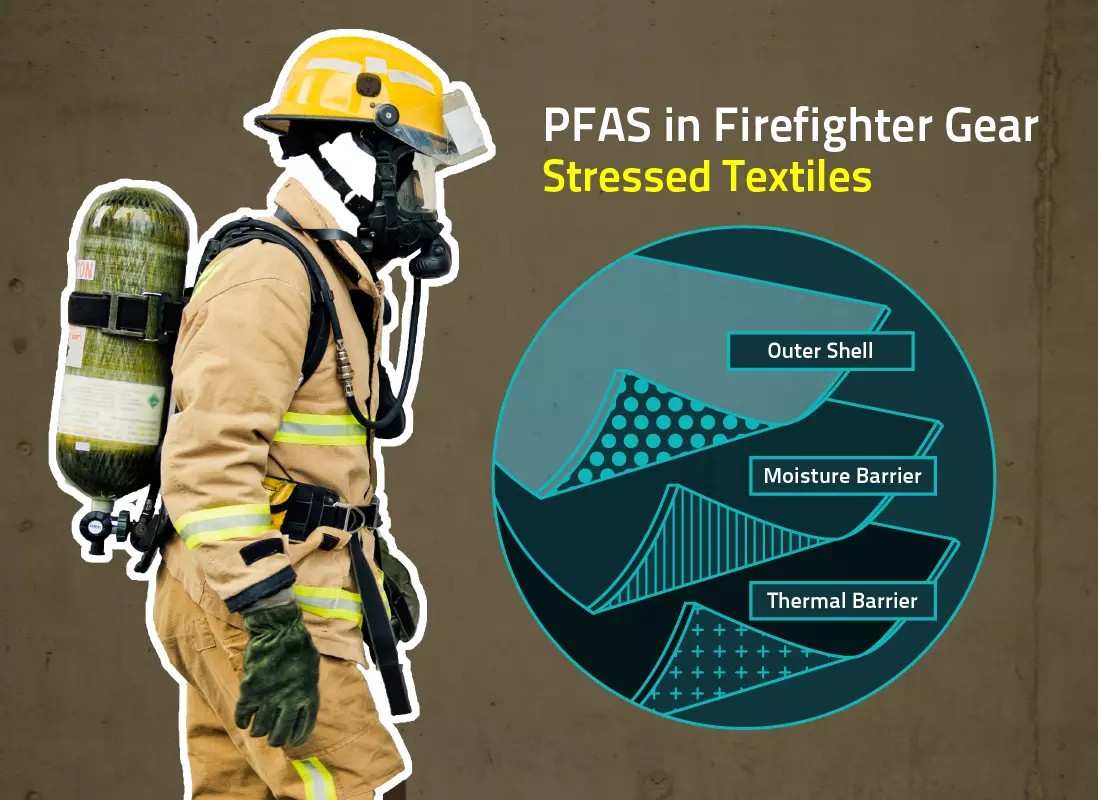
For PFAS, the standard now has a restricted substances list that sets limits for specific PFAS and other chemicals of concern, and it requires total fluorine to be reported. The light resistance test that pushed manufacturers toward fluorinated moisture barriers is now run on the full composite of outer shell, moisture barrier and thermal liner, rather than on the moisture barrier alone. And there's an optional label that a manufacturer can put on a layer whose fluorine content tested low.
That label is where buyers get confused. NFPA dropped the phrase "PFAS-free." The optional label instead says the element, at certification, has a PFAS (total fluorine) concentration of no more than 100 parts per million. The Fire and Emergency Manufacturers and Services Association (FEMSA) points out in its user guide that the claim rests on testing of the outer shell, moisture barrier, thermal barrier and wristlets only. Trim, reinforcements, elastic and hook-and-loop aren't tested. FEMSA also calls the 100 ppm cutoff "an arbitrary level" and notes that a total fluorine test counts fluorine from every source, so it can overstate the PFAS that's actually there.
Certification checks the restricted substances list through paperwork. A manufacturer can show compliance with a certificate from an independent attestation organization, and the standard's annex names the OEKO-TEX Standard 100 Supplement PPE as one example.
Removing PFAS can add something else
When the International Association of Fire Fighters (IAFF) tested gear marketed as an alternative, it found one "PFAS-free" moisture barrier containing the brominated flame retardant decabromodiphenyl ethane (DBDPE) at 19 times the PFAS level found in legacy barriers. DBDPE is on NFPA's restricted substances list. According to the union, flame retardants get added to these barriers so they'll pass the vertical flame test, which takes the moisture barrier out of the three-layer composite and tests it alone. Its purchasing guide warns that no protective gear has been proven completely free of hazards, and it tells departments to get proof of compliance with the restricted substances list from an independent, accredited lab.
The gear already on the rack
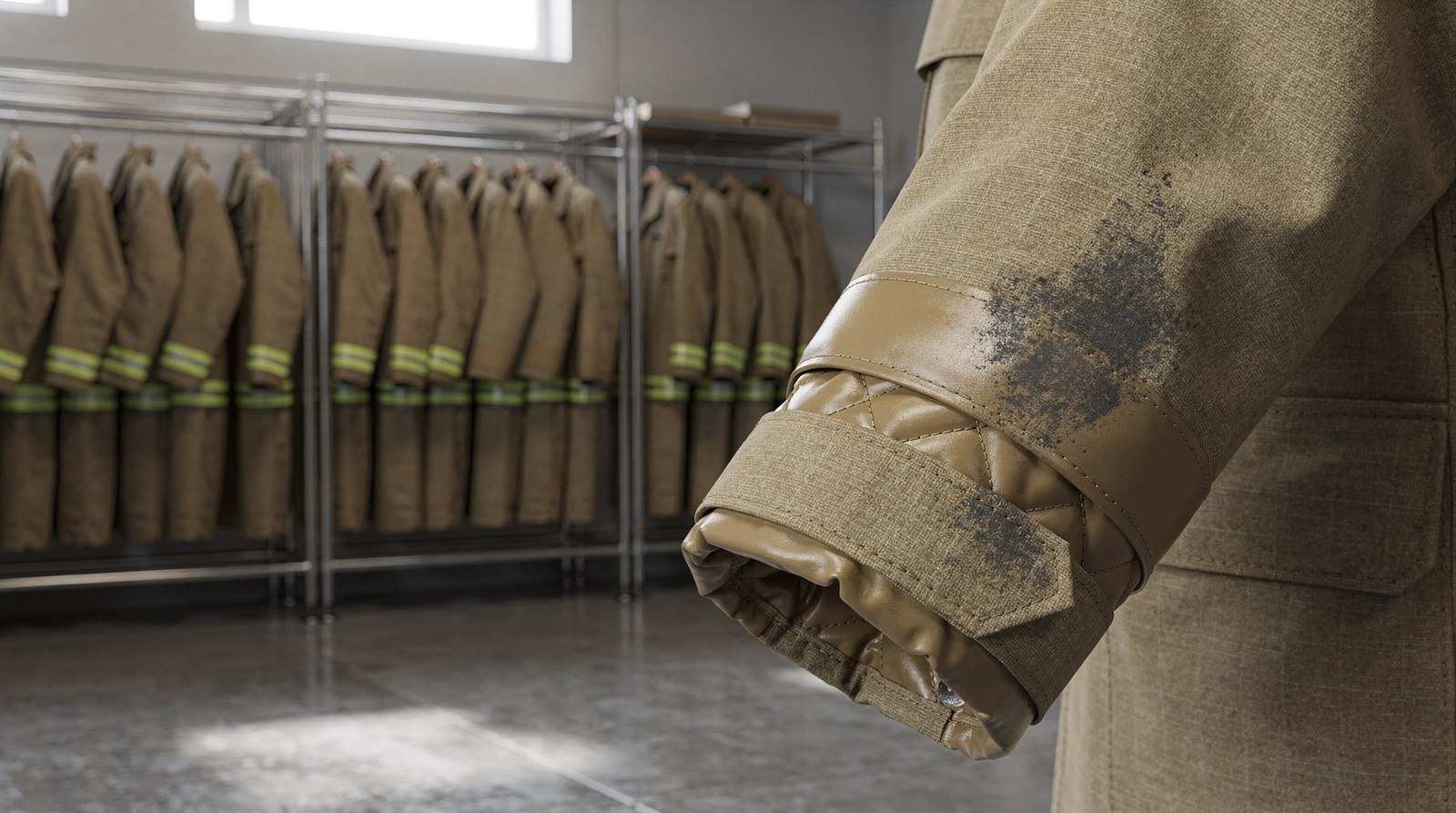
Most members will wear legacy gear for years. In the second study of turnout textiles from the National Institute of Standards and Technology (NIST), abrasion raised PFAS levels in every material tested. In outer shells treated with a durable water repellent, the median total went from 1,430 micrograms per kilogram new to 3,500 after abrasion, 4,420 after heating and 3,540 after weathering. Laundering lowered it to 963. The highest levels were in those treated outer shells and the lowest in thermal liners.
In some samples, laundering lowered the measured levels, and NIST's researchers think the PFAS likely went down the drain with the wastewater. What a department can control is how much contact members have with worn gear and where that gear travels. A joint advisory from the IAFF and the Metropolitan Fire Chiefs Association lists the precautions:
- Keep turnout gear out of firehouse living areas.
- When gear rides in a personal vehicle, put it in a sealed bag or container, and keep it out of the passenger compartment if you can.
- Clean apparatus cabs regularly and after every fire.
- Wash your hands after handling gear.
- Don't wear turnout gear on responses that don't need that level of protection.
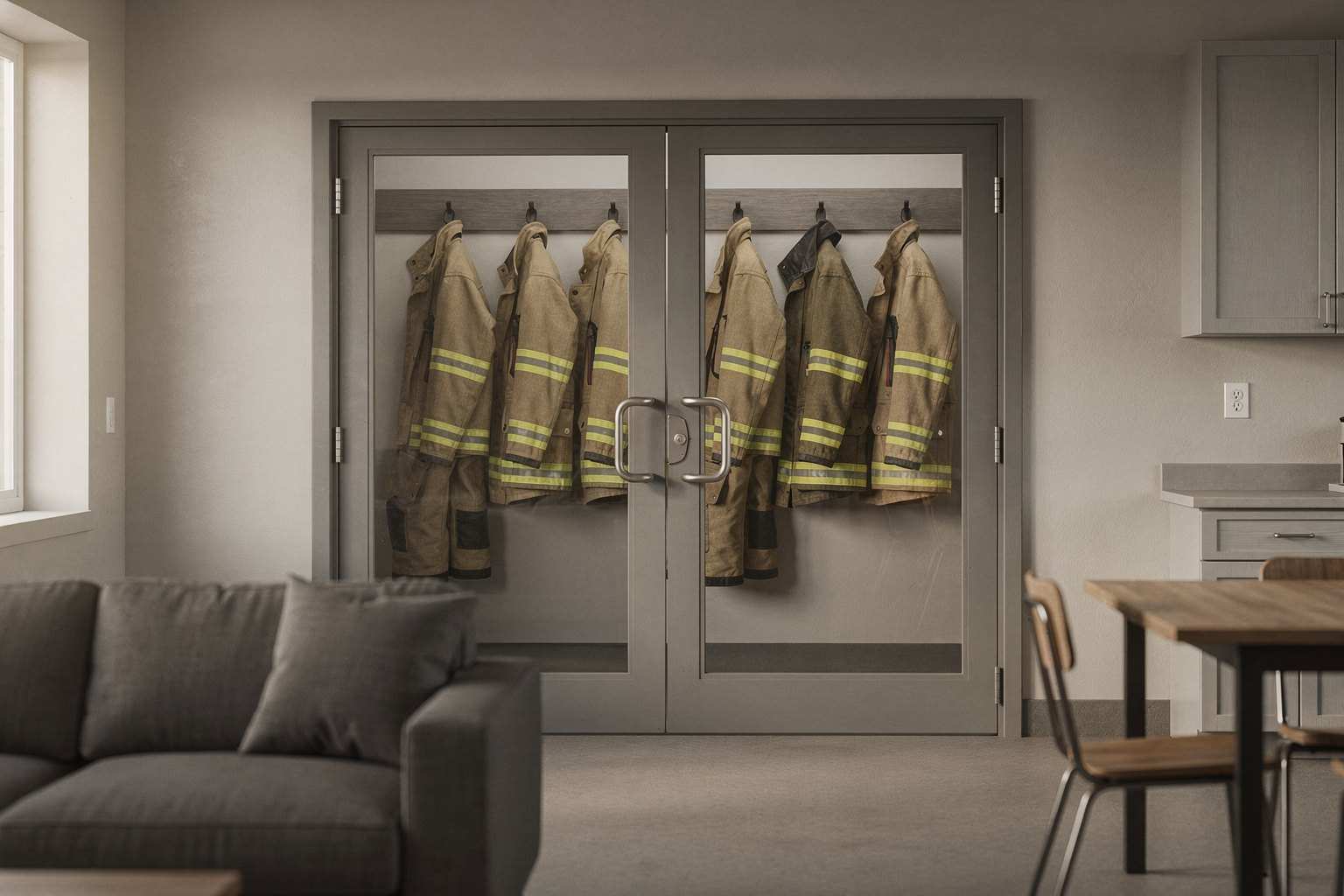
The advisory also says full protective equipment and self-contained breathing apparatus during firefighting and overhaul are still the first line of defense.
Our advice: put money into a second set before it goes into early replacement of sets that are still serviceable. A clean spare keeps members out of contaminated gear between washes and cuts down on wear on both sets. It also gives you a few more years to see how the new materials hold up in the field.
The lawsuits
In 2023 the IAFF sued NFPA in Massachusetts, arguing that the light resistance test effectively forced manufacturers to use PFAS-treated moisture barriers. A conspiracy claim was dismissed in March 2024, and in October 2025 the two sides filed a joint stipulation dismissing the rest with prejudice. NFPA President Jim Pauley said, "As NFPA stated from the very beginning, the IAFF's legal strategy was misguided and not supported by the facts."
Cases against the companies that make the chemicals, textiles and gear are still moving. In Connecticut, the Uniformed Professional Fire Fighters Association of Connecticut, 12 local unions and 12 individual firefighters sued 3M, DuPont and several gear manufacturers in federal court. In September 2026, U.S. District Judge Alvin W. Thompson let the firefighters' core product liability claims go forward. Under that ruling, firefighters who haven't developed symptoms can still ask for a defendant-funded medical monitoring program. According to the plaintiffs' lawyers, the judge dismissed the claims the unions brought on behalf of their members, along with some claims against 3M.
Lawsuits brought by gear buyers are heading to one courtroom. In August 2026 the Judicial Panel on Multidistrict Litigation created multidistrict litigation No. 3191, which pulls together proposed class actions brought by turnout gear purchasers. Those cases will be heard in the District of Minnesota before Judge Jeffrey M. Bryan. The panel kept the cases out of the existing aqueous film-forming foam litigation in South Carolina.
Since Jan. 1, 2025, Massachusetts has required sellers to give buyers written notice of PFAS in gear, and from Jan. 1, 2027, it bars knowingly selling gear with intentionally added PFAS.
What replacement costs
Published department figures give a rough range. They aren't directly comparable, since some include second sets and some don't.
| Department | Purchase | Cost |
|---|---|---|
| Concord, N.H. (2024) | 92 primary sets | $305,000 |
| East Providence, R.I. (2024) | Full department | $658,000 |
| Portland, Ore. (2026) | About 175 sets a year | About $787,000 a year |
Concord works out to about $3,300 a set. Portland budgets about $4,500 a set, and its sets usually last seven to eight years, with mandatory retirement at 10. A department that buys on a normal cycle spends most of what a full swap would cost, spread over the life of the gear.
Questions for the vendor
Put these in writing and ask for written answers, attached to the bid:
- Does the gear comply with NFPA 1970, 2025 edition, and with the restricted substances list?
- Which layers and components carry a low-fluorine claim, and which were tested? Ask specifically about trim, reinforcements, elastic and hook-and-loop.
- Was the result a total fluorine screen or targeted PFAS testing? Ask for the lab report.
- Can you provide the attestation certificate and the OEKO-TEX Standard 100 Supplement PPE report?
- Does the gear contain flame retardants or other chemical treatments, and which ones?
- Have those treatments been tested for human toxicity, were the results published in a peer-reviewed journal, and can you share the full results?
- What field-wear and laundering data do you have on the new moisture barrier, and how long has it been in service at other departments?
- What's the lead time for a full department order, and how are sizing and alterations handled?
The questions on flame retardants and toxicity testing come from the IAFF's purchasing guide, and those on components and test method from FEMSA's account of what the low-fluorine label covers.
Score the bids on which answers come back with a lab report or certificate attached. A vendor that points to the hangtag hasn't shown what's in its gear.
Sources (16)
Sources
- East Providence Fire Department becomes first in RI to go PFAS-free (City of East Providence)
- Committee Staff Summary, Resolution 2026-286, PFAS Firefighter Gear (City of Portland)
- Concord City Council approves funding to replace firefighter equipment (Concord Monitor)
- NFPA 1970 has been issued (NFPA)
- NFPA 1970 standard development page (NFPA)
- Standards Council decision D#24-7 on TIA 1793 to NFPA 1970 (NFPA)
- User Information Guide for Structural Firefighting Garments, 2025 (FEMSA)
- What to Know Before Purchasing "PFAS-Free" Gear (IAFF)
- PFAS advisory (IAFF)
- Wear and Tear May Cause Firefighter Gear to Release More 'Forever Chemicals' (NIST)
- Per- and Polyfluoroalkyl Substances in Firefighter Turnout Gear Textiles Exposed to Abrasion, Elevated Temperature, Laundering, or Weathering (NIST Technical Note 2260)
- IAFF asks court to dismiss all remaining claims (NFPA)
- IAFF and NFPA file joint stipulation to dismiss PPE PFAS lawsuit (Fire Law Blog)
- Judge allows Connecticut firefighter lawsuit over PFAS in turnout gear to proceed (Silver Golub & Teitell)
- JPML creates new MDL for non-AFFF firefighter turnout gear litigation (Thompson Hine)
- Governor Healey signs bill protecting firefighters from toxic chemicals in gear (Commonwealth of Massachusetts)