In this story
The 911 call came in at 3:44 on a December morning. At about 3:49 the first engine pulled up to a single-story wood-frame house with heavy fire showing from two sides. It was 14°F, with a northwest wind at 19 mph. The officer started his 360, ran into heavy brush and couldn't reach the back of the building, but radioed that the 360 was complete. His crew went in the front door with a line, into thick smoke and no visibility. Five minutes after the engine arrived, the officer heard a crack, and part of the floor dropped three of them into a basement that had been burning for some time. About 10 minutes later a fourth firefighter, coming back from the hydrant, walked in the front door and fell into the same hole.
All four survived with burns, one also with a partly torn knee ligament. The National Institute for Occupational Safety and Health (NIOSH) investigated through its Fire Fighter Fatality Investigation and Prevention Program (FFFIPP) and published Four Career Firefighters Injured from a Floor Collapse in an Abandoned Residential Structure Fire – Kansas, Report F2026-01.
The department isn't named in the report, but the date, December 29, 2025, and the details match a fire Kansas City, Kansas, firefighters fought at a vacant house on Parallel Parkway, where three firefighters fell into the basement and a fourth was hurt. "Firefighters were covered in ice pretty much from head to toe," Fire Chief Dennis Rubin told KSHB. All four were released from the hospital the next day.
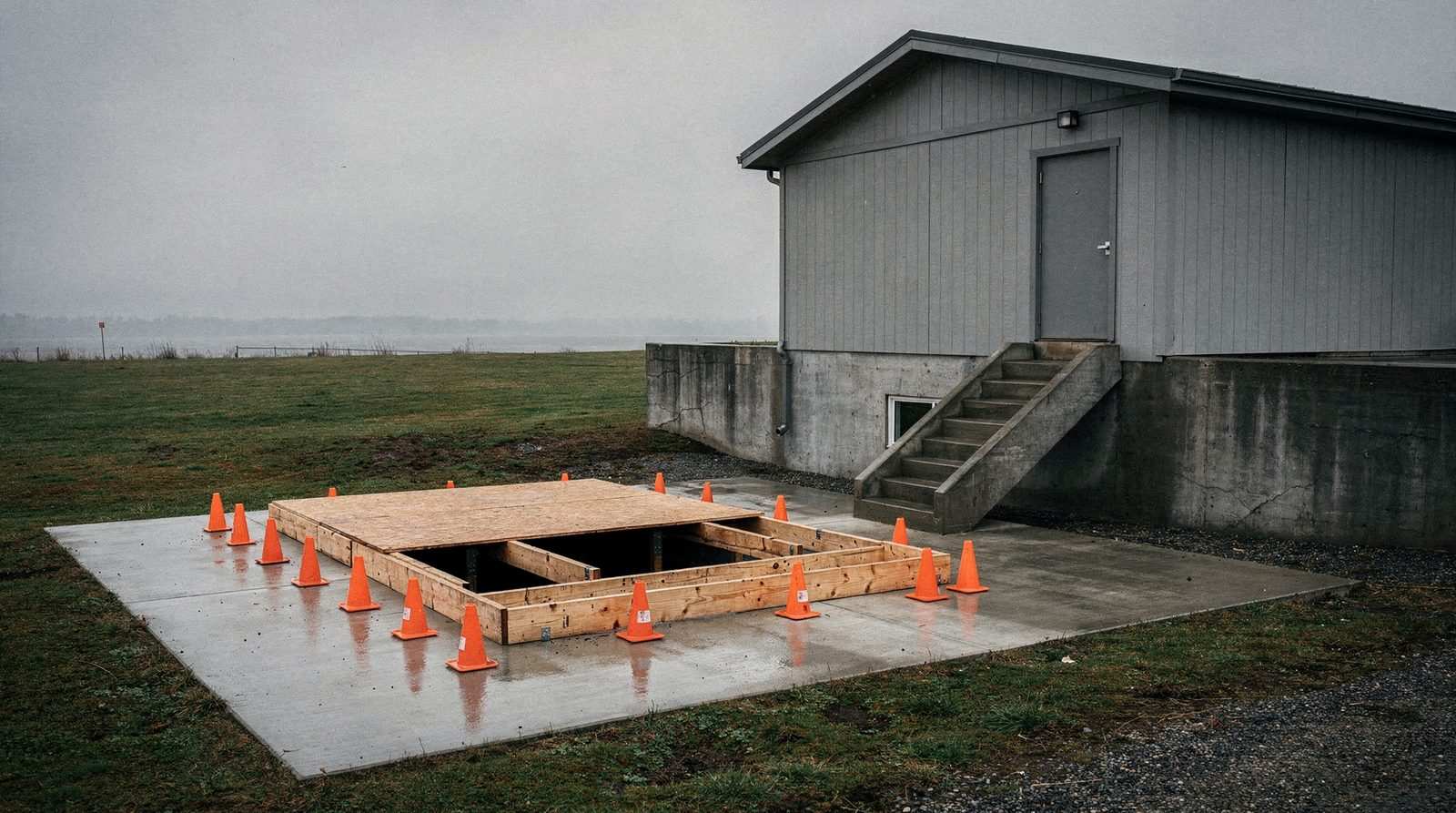
Post-incident inspection found that the floor over the basement was framed mostly with 2x6 and 2x8 joists, smaller than the 2x8 to 2x12 joists the report calls typical of 1950s houses, and that several steel columns in the basement had bowed and twisted in the heat. Underwriters Laboratories (UL) research cited in the report found that 2x12 floors exposed to a basement fire collapsed in under 13 minutes. We read this collapse as set up before anyone crossed the threshold, so the first fixes belong in size-up, not in new equipment.
The 360 that wasn't complete
A full lap would have shown what NIOSH describes: a garage opening on Side Bravo with fire throughout the basement, while Side Charlie gave no sign of fire on the first floor. NIOSH says an accurate 360 and risk assessment "may have warned the officer of a significant below grade fire in the abandoned structure." The report restates the National Fire Protection Association (NFPA) 1550 risk principles, including that "no risk to members is acceptable when there is no possibility of saving lives or property."
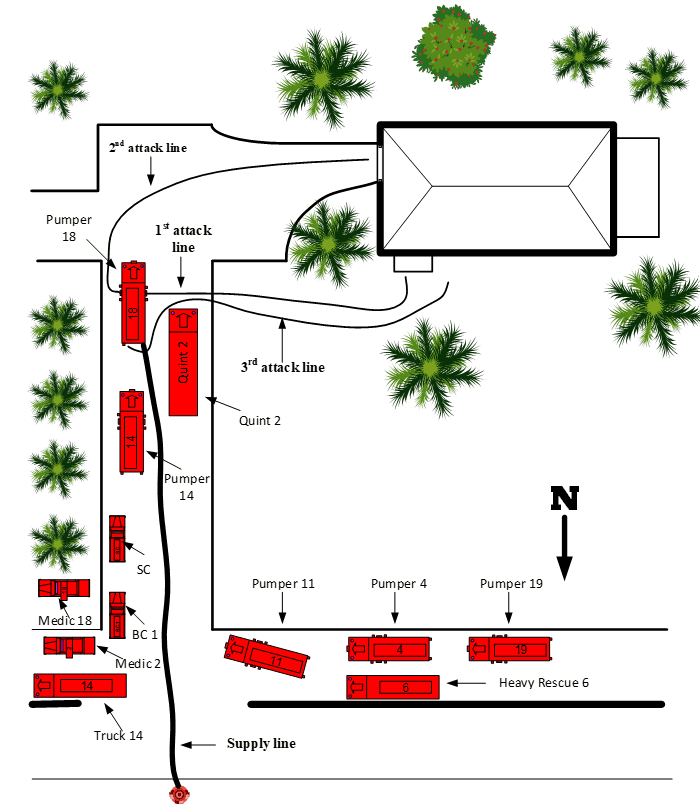
At your next drill, have every officer run a timed 360 and call out each side, below-grade openings included. On a real fire, an officer who can't finish the lap should say so on the radio and name who will. If the NFPA 1550 risk principles aren't on the back of your tactical worksheet, put them there.
Sounding won't tell you if the floor will hold
Below-grade fires are among the most dangerous and challenging fires a department faces, NIOSH says. The safest option it gives is attacking through a below-grade opening, or controlling the fire from outside through an opening to the basement.
In plain terms, the NFPA 1700 tactical considerations NIOSH quotes:
- Where the neutral plane sits at the first-floor door can be the first sign of a basement fire.
- Sounding the floor and thermal imaging cameras (TICs) won't tell you whether the floor will hold, especially in lightweight construction.
- Control a basement fire from an exterior opening on the same level as the fire.
- Coordinate any ventilation, including opening basement doors or breaking windows, with effective water on the fire.
On Monday, make "basement yes, no or unknown" and "basement access location" required items in the size-up report on every residential working fire. Pull your basement-fire standard operating guideline (SOG) and check it against those four points, especially the warning about sounding and TICs. Find out where basements are common in your area and tell crews.
Between 1998 and 2017, NIOSH investigations documented 24 below-grade fires that killed 32 firefighters and seriously injured 19. In Project Mayday data, falls into a basement figured in 20% of more than 2,700 career-department Maydays and 24% of more than 1,900 volunteer-department Maydays.
Could anyone inside survive?
Vacant buildings can have unstable structure, unknown contents, no utilities and people living in them. NIOSH points to NFPA 1700: consider a defensive strategy to avoid entry, expect early collapse, use exterior fire control before entry, and weigh realistically whether anyone inside could survive. NIOSH also points to NFPA 1400's call for annual proficiency training on fireground procedures.
If you don't have a vacant-building SOG, start one from those NFPA 1700 considerations. Check whether computer-aided dispatch (CAD) flags known vacant or abandoned addresses; if it doesn't, ask prevention or code enforcement for their list. The annual proficiency session belongs on the calendar too.
"This building has been vacant for a while," Rubin told KSHB. "Sometimes people use vacant buildings for shelter. We understand that, but we hope they don't use warming fires."
What command didn't hear
Firefighters close to the collapse knew it had happened, but "the critical information was not relayed or announced," NIOSH found, and that delayed resources and tactical changes. The report wants interior crews to report conditions on entry and update at benchmarks such as "primary search complete, all clear," "the fire has been knocked down," or "water on the fire." Division or group supervisors can give ongoing conditions, actions and needs (CAN) reports, and staying informed is the incident commander's (IC's) job.
None of the first three Maydays told command what had happened or where. Two from the officer were unreadable, and the third identified the member but not the collapse or his location. Only the fourth firefighter, who fell in later, gave his location and air. The first anyone outside knew of it, according to NIOSH, was another crew hearing a trapped firefighter scream. The report recommends a Mayday tactical worksheet that prompts the IC to have the member activate the emergency alert button and the personal alert safety system (PASS), and to get air status and location. NIOSH says this process "is too important to operate from memory."
Drill one sentence every member can say: "Emergency traffic: floor collapse, (location), members in the hole." Have every member practice a full Mayday on air through the radio interface they actually use, and grade it on who, what, where, air and needs. Practice CAN reports at every training evolution, and get a Mayday checklist onto the back of the IC tactical worksheet.
Were the radio and mask paired?
Some companies in the department were trialing a self-contained breathing apparatus (SCBA) accessory that sends radio traffic over Bluetooth from the mask, and only those companies had been trained on it. The officer who fell was acting up from a company outside the trial. NIOSH believes his radio and SCBA were not paired, and CAD recorded two unreadable transmissions from him. Its finding, for any atmosphere immediately dangerous to life or health (IDLH): members "should not use SCBA accessories in an IDLH environment until they are trained and proficient in their use," with training that covers pairing and troubleshooting. NIOSH has since published a related advisory, Preventing Loss of Communication: Using SCBA Bluetooth Radio Accessories.
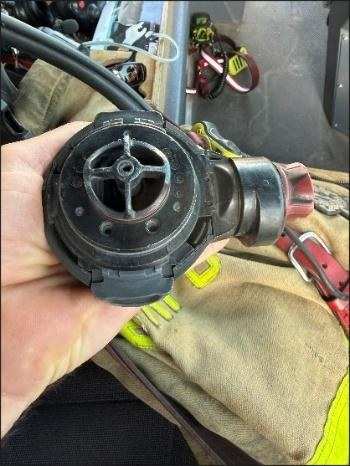
- If you run any SCBA accessory, make a pairing check part of the daily SCBA check and the shift-change in-service check, with a quick radio test through the mask.
- Make sure acting officers and members moved between companies are trained on whatever is on the rig they're riding that day.
The passports were never all collected
Give accountability to someone who will not also be on the rapid intervention team (RIT). In this fire, the officer collecting the department's accountability passports was also RIT. When the Mayday came in he went into the basement with the team, and nobody finished collecting them. NIOSH lists the usual tools, from command boards to electronic bar-coding, and describes a staff aide or accountability officer role.
The department has since added a battalion chief as accountability officer to its low-rise assignment, and an additional arriving safety officer now takes over as staging area manager.
Staffing slowed the second attack line: the second engine's driver had to put on turnout gear and SCBA after connecting the supply line. NIOSH says four-person staffing per NFPA 1750 "may have allowed for a second firefighter to be prepared to assist." NFPA 1750 sets a minimum of four on-duty members for engine and truck companies, and an initial full alarm to a low-hazard structure fire of at least 20 members, including an IC with an aide, a rapid intervention crew (RIC), an incident safety officer (ISO) and initial emergency medical services (EMS).
- Count your actual first-alarm residential response at the 2 a.m. low point and give that number, next to the NFPA 1750 figures, to whoever decides staffing.
- For companies running below four, write down which task each riding position drops, and in what order.
Officer checklist
- Timed 360 drill with below-grade call-out
- "Basement yes/no/unknown" added to size-up template
- Basement-fire SOG checked against the NFPA 1700 points NIOSH lists
- Vacant-building SOG drafted or reviewed; CAD flag requested
- "Emergency traffic: floor collapse" phrase drilled
- SCBA accessory pairing in the daily check; acting officers trained
- On-air Mayday drill, graded
- Accountability officer is never also RIT
- First-alarm staffing count compared to NFPA 1750
Sources (4)
Sources
- NIOSH FFFIPP, Four Career Firefighters Injured from a Floor Collapse in an Abandoned Residential Structure Fire – Kansas, Report F2026-01 (April 2026).
- NIOSH, Preventing Loss of Communication: Using SCBA Bluetooth Radio Accessories, Publication 2026-113 (August 2026).
- KSHB 41, Fernanda Silva, Neighbors wake to sirens, later learn 4 KCK firefighters were injured in floor collapse (December 2025).
- KSHB 41, 4 firefighters injured battling vacant house fire Monday morning in Kansas City, Kansas (December 2025).