In this story
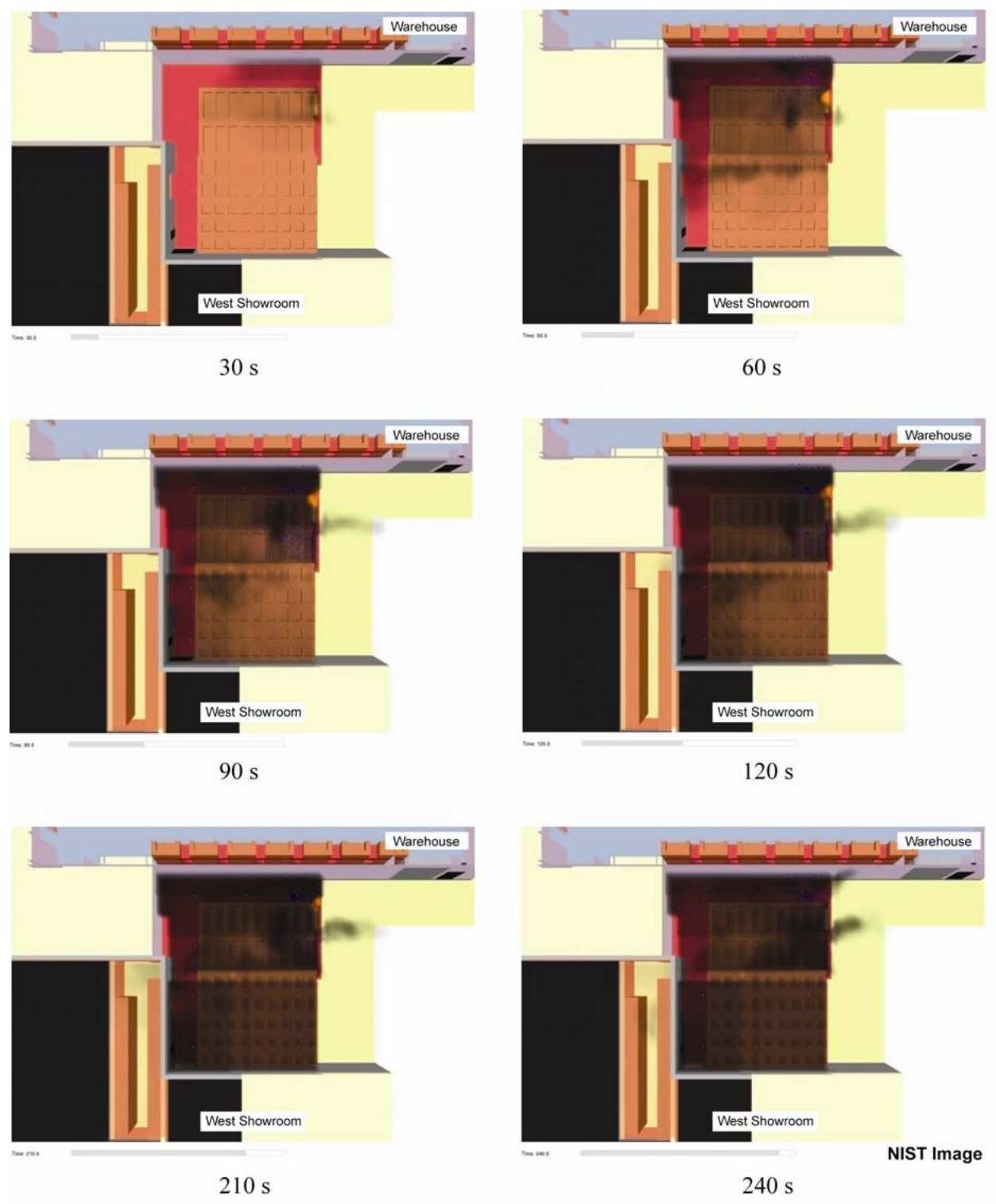
A little before 7 p.m. on June 18, 2007, discarded furniture caught fire outside the loading dock of the Sofa Super Store on Savannah Highway in Charleston, South Carolina. The first call came in at 7:07 p.m. The store's showrooms covered more than 31,000 square feet, packed with upholstered furniture, and there were no sprinklers. The fire spread through the showrooms, and shortly before 8 p.m. the roof over the main showroom collapsed.
Nine Charleston firefighters died, remembered since as the Charleston 9: Engineer Bradford "Brad" Baity, Captain Mike Benke, Firefighter Melvin Champaign, Firefighter James "Earl" Drayton, Engineer Michael French, Captain William "Billy" Hutchinson, Captain Mark Kelsey, Captain Louis Mulkey and Firefighter Brandon Thompson.
Mayor Joseph P. Riley Jr. appointed a Post Incident Assessment and Review Team led by J. Gordon Routley. Its Phase II report came out in May 2008. The National Institute for Occupational Safety and Health (NIOSH) published its own investigation in 2009, and the National Institute of Standards and Technology (NIST) followed with a technical study in 2011.
What the investigators found
On the fire department side, the investigators named one cause above the others: "The predominant factor identified in the analysis of Fire Department operations is the failure to manage the incident according to accepted practices." There was no structured command system, and the duties of an incident commander weren't performed.
The report also addressed the firefighters who died. Its analysis "does not suggest that any of the firefighters who lost their lives, or any of the surviving members of the Charleston Fire Department, failed to perform their duties as they had been trained or as expected by their organization."
The department, the team wrote, "took pride in conducting aggressive interior fire attack using small hose lines with very limited water flows," and operated with what it called a "default offensive strategy." Two 1½-inch lines went into the loading dock, each set to flow 60 gallons per minute. A combined 120 gallons per minute wasn't enough for more than 2,200 square feet of burning furniture.
Radio recordings held 16 distress messages from firefighters inside the store. None of them was heard by a command officer on scene.
The building had its own history. The loading dock had been enclosed without permits sometime after 1996. The city last inspected the store in 1998, and in 2001 Charleston amended its code to drop mandatory annual fire inspections for mercantile occupancies. The Routley team concluded that a sprinkler system would likely have kept the fire in the loading dock area, and that the fire itself could have been prevented.
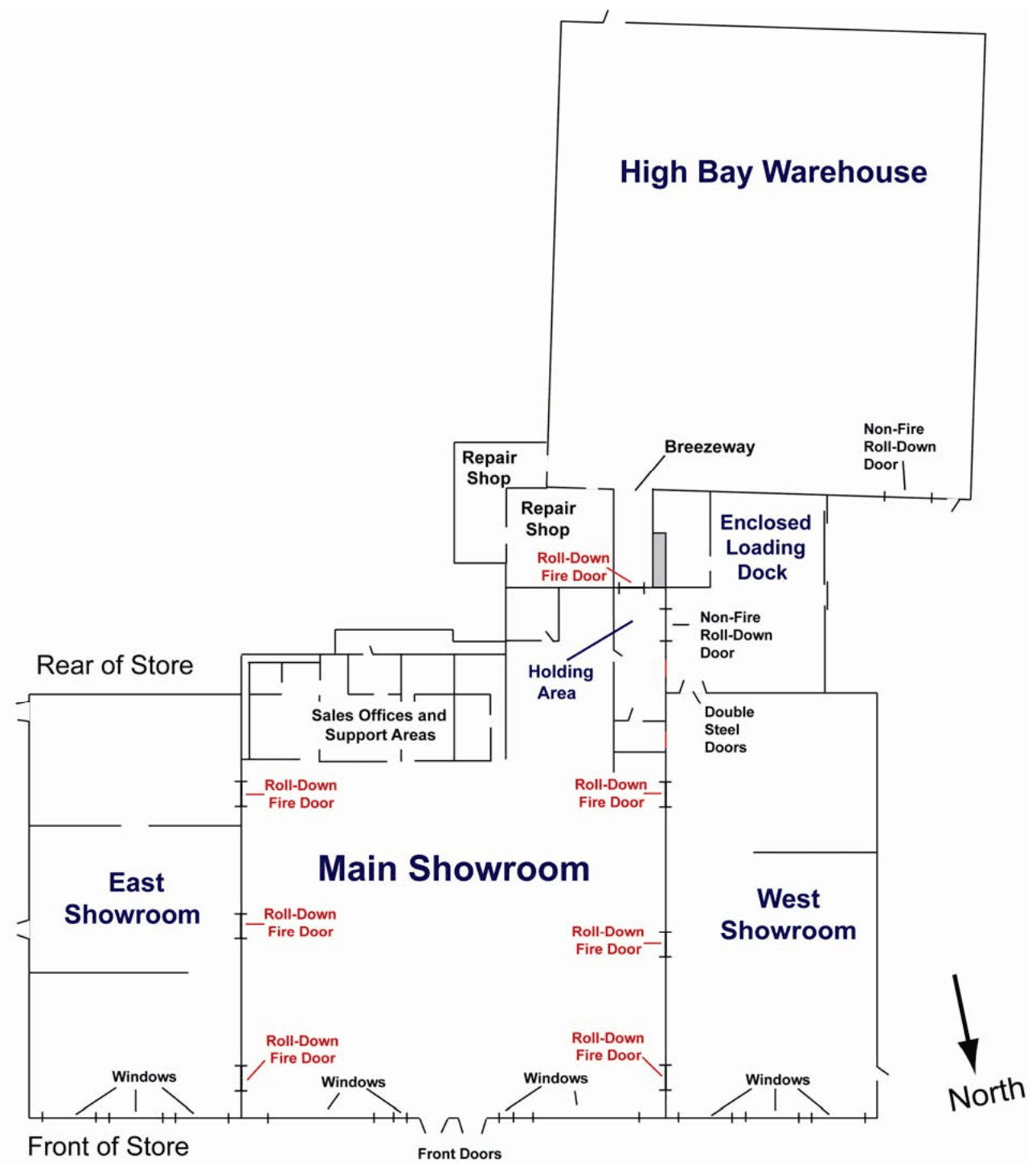
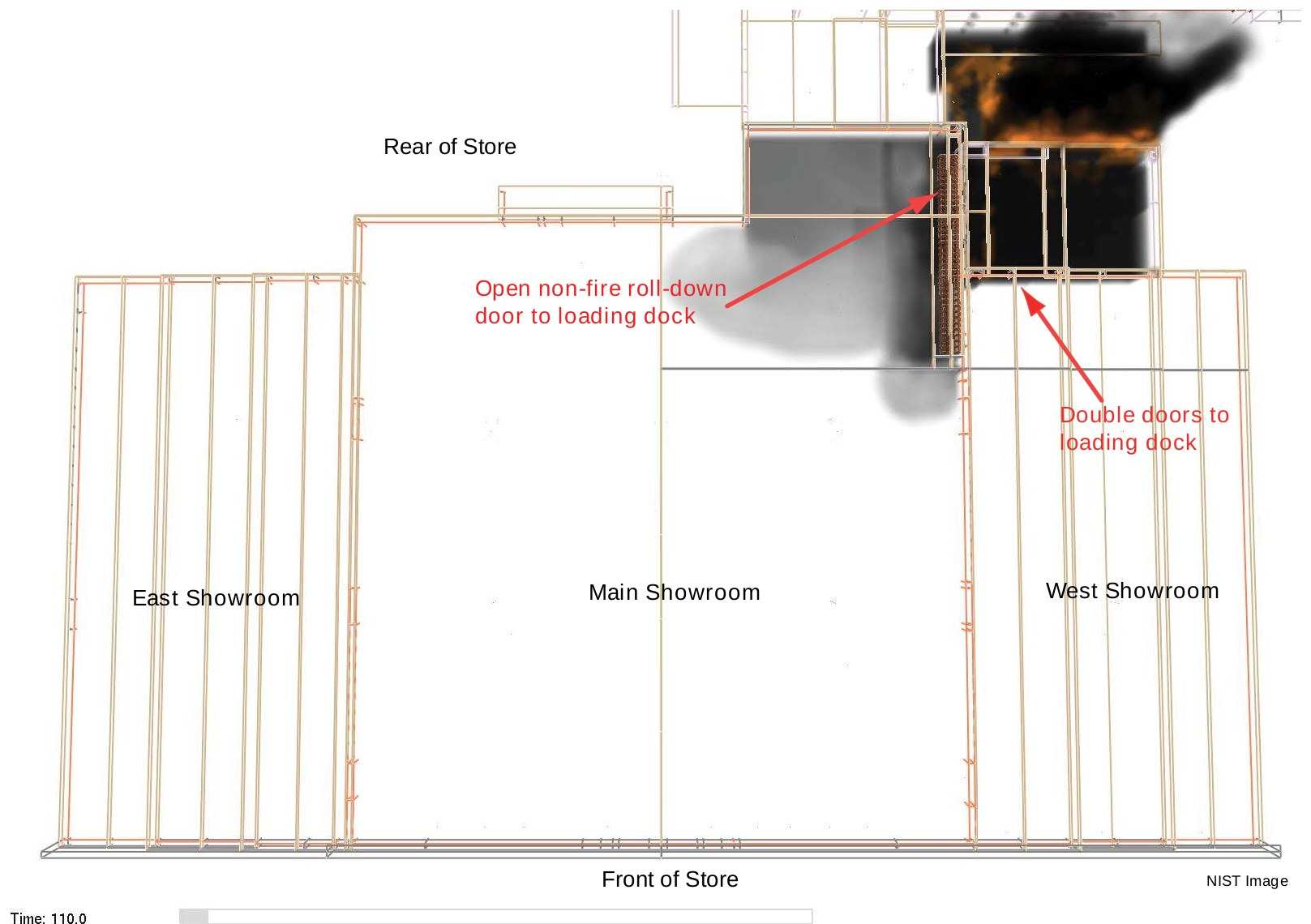
The engineering study by NIST added a ventilation finding. It concluded that guidelines on when, how and why to ventilate would have prevented the rapid fire movement that followed the breaking of the front windows.
"Unfortunately, as in many other cases, the lessons do not provide new insight or information and the recommendations are not revolutionary," the Routley report says. "The situation that occurred in Charleston on June 18, 2007 was predictable and the outcome was preventable."
NIOSH found that the city's fire department was dispatched through the police department's 911 center, while the county ran its own center and some neighboring departments kept their own. The first mutual aid department to arrive, a career department with 60 members, shared jurisdictional boundaries so intermingled that adjoining properties on the same block could belong to different departments. At least nine other firefighters, two of them from mutual aid departments, barely escaped serious injury. NIOSH recommended a single central dispatch center for multi-jurisdiction incidents and radios that let every responding company talk to each other.
Command and staffing since 2007
The recommendations from the Routley team read like a modern command checklist: a fixed command post, safety officers, company integrity, accountability with regular personnel counts, a rapid intervention crew, Mayday training and someone monitoring the tactical channel. NIOSH's list overlapped and added adequate staffing, adequate fire streams, pre-incident planning and joint training with mutual aid companies.
Charleston acted on them. By the time NIOSH published, the department had already hired a full-time safety officer. Chief Rusty Thomas retired in 2008 and the city hired Tom Carr from Maryland to lead the rebuild. By 2017 the city had spent more than $8 million on the department, according to the Post and Courier. Routley, looking back at the 10-year mark, said "They've really come 180 degrees from where they were."
Staffing changed most visibly. "We prioritize four-person staffing on all of our apparatus," Battalion Chief TJ Axson told ABC News 4 in 2025. "Now, we're having upwards of seven apparatus arriving [and] upwards of 30 plus people arriving on scene."
The department has since added behavioral health support. Assistant Chief David Griffin described peer support, four trauma-informed clinicians working with the department and mental health instruction in recruit school.
Teaching the lessons
The lessons became curriculum, and the members who were there accepted the changes. "We knew changes were coming, and I didn't have a problem with them because I knew they were coming because of the nine guys," said Larry Hood, who helped recover the nine as an engineer and was a battalion chief a decade later.
Griffin ran the pump on Engine 11 that night and has since traveled the country to talk about the fire's lessons. "That's incredible to me: an 18-year-old kid who wants to be a firefighter is learning from nine guys who died in 2007, 10 years later," he said at the 10-year mark.
The code side
The code recommendations from NIST were specific. They asked every state and local jurisdiction to adopt a current model building and fire code and enforce it, to qualify inspectors and plan examiners to a national standard such as the National Fire Protection Association's NFPA 1031, and to require sprinklers in all new furniture stores and in existing ones with any single display area over 2,000 square feet.
The model codes changed for new buildings. The International Building Code (IBC) has required sprinklers in new construction where upholstered furniture is sold since its 2009 edition. In the 2021 edition, a Group M fire area needs sprinklers when the floor area used to display and sell upholstered furniture or mattresses exceeds 5,000 square feet. NIST had asked for sprinklers in new furniture stores of any size. "It's not unusual that a code update is the result of lessons learned, and unfortunately sometimes learned the hard way," said Richard P. Weiland, then chief executive of the International Code Council. The model codes don't require existing furniture stores to add sprinklers. "Existing structures usually are required to meet the code that was enforced when the property was built," Weiland said.
Proposals to mandate sprinklers in South Carolina commercial buildings had been rejected since a 2004 hotel fire in Greenville. In 2008 Charleston asked the General Assembly for authority to go beyond the state building code and require sprinklers locally, and that failed. Lawmakers instead passed tax credits for voluntary sprinkler installation and overrode Governor Mark Sanford's veto. Months later, the Post and Courier reported that no city or county had adopted the local half of the incentive. "Our request to the General Assembly was to give the cities the authority to require (sprinklers)," Riley said.
| Recommendation | What happened |
|---|---|
| Sprinklers in new furniture stores | In the IBC since 2009 |
| Sprinklers in existing stores | Not a model code requirement |
| Local authority to require more | Denied by South Carolina in 2008 |
| Sprinkler incentives | State tax credits passed in 2008, slow uptake |
Questions for your own department
- Do you have a default strategy, and would your crews recognize a building where it doesn't fit?
- Does the flow you can deliver match the fuel load in your biggest commercial occupancies? Do the arithmetic for the furniture store, the big-box store and the warehouse in your district.
- Who is listening to the tactical channel at a working fire, and what happens when a Mayday comes in on it?
- When did your crews last train with the mutual aid companies they will actually work beside?
- Who inspects your mercantile occupancies, how often, and do company officers report what they see on preplan visits to the people who can enforce it?
Each question traces back to a finding in the Charleston reports, and each can be worked through on a drill night.
Sources (9)
Sources
- City of Charleston Post Incident Assessment and Review Team, Firefighter Fatality Investigative Report, Sofa Super Store (Phase II), 2008
- City of Charleston, Post Incident Assessment Team
- NIOSH, Nine Career Fire Fighters Die in Rapid Fire Progression at Commercial Furniture Showroom, South Carolina (F2007-18), 2009
- NIST, Recommendations from the NIST Study of the Charleston Sofa Super Store Fire, 2011
- International Code Council, International Building Code in Harmony with Furniture Store Fire Safety Recommendations, 2011
- International Code Council, 2021 IBC Use of Fire Sprinklers and Alarms (training slides)
- David Slade, The Post and Courier, South Carolina fire sprinkler tax incentive slow to become available, 2008 (reprint)
- Glenn Smith, The Post and Courier, Forged by fire: change, progress hallmarks of Charleston Fire Department's recovery from deadly Sofa Super Store blaze, 2017
- Emily Deanne, ABC News 4, Pain to progress: changes made to Charleston Fire Department after tragedy, 2025