In this story
In March 2026, the Newport Beach (Calif.) Fire Department asked its City Council to approve a three-year contract, worth up to $375,000, for cleaning, inspecting and repairing its turnout gear and other personal protective equipment (PPE). The winning bidder had done the same work for the city on a short-term contract in 2024, and its prices had gone up. The National Fire Protection Association (NFPA) had recently rewritten its care standards for turnouts and self-contained breathing apparatus (SCBA), and Fire Chief Jeff Boyles tied the two: "Labor and service costs submitted by CA PPE Recon are higher than its original 2024 rates and is largely due to recent changes in NFPA standards."
He summed up the changes: "NFPA standards for turnout gear, SCBA, helmets, and other PPE have now merged into a new consolidated standard, NFPA 1850. For 2026, this standard includes enhanced cleaning and sanitation protocols with stricter, verified contaminant removal standards, mandates regarding cleaner, safer storage, and new inspection standards." The department moved the higher costs into its next budget request.
The merger folds NFPA 1851 (care of structural and proximity ensembles) and NFPA 1852 (care of open-circuit SCBA) into NFPA 1850, 2026 edition. Newport Beach's new agreement still calls for work meeting "the current version" of NFPA 1851. Expect the old numbers to linger in your own paperwork too.
Before you build a compliance calendar or change a standard operating procedure (SOP), check each date and figure against the current edition of NFPA 1850 and its issued amendments.
Two standards now cover your gear. The design, testing and certification rules sit in NFPA 1970 (2025 edition), which replaced NFPA 1971, 1975, 1981 and 1982 (the personal alert safety system, or PASS, standard). Selection, cleaning, inspection, repair, storage and retirement sit in NFPA 1850.
Who runs the program?
The standard has the department appoint a personal protective clothing (PPC) manager to run the program, with optional PPC technicians for hands-on maintenance and repair. Annex E lays out their duties and training, according to a Texas Commission on Fire Protection (TCFP) briefing.
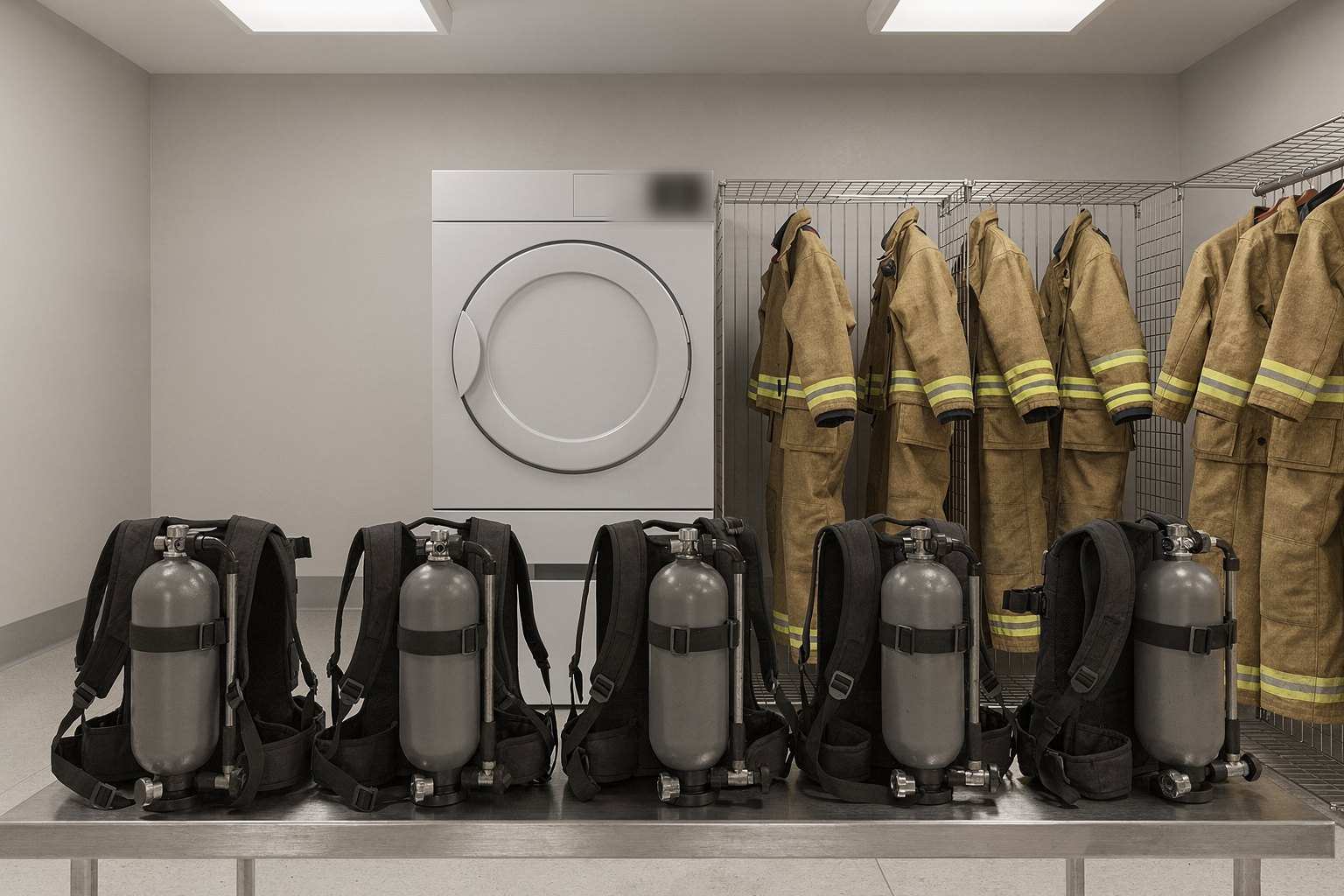
Filling that seat may be the hard part. "And yet, very few fire departments have a person who is 'up to speed' on PPE selection and maintenance," wrote Robert Tutterow, a retired fire department safety coordinator. He suggests fitting the job to the department. "In midsize departments, this might be a shared responsibility of a member, preferably an officer." For smaller ones, "it might be wise to consider having a retired firefighter or community volunteer who is not physically able, nor wishes to be a firefighter, to be the PPC manager."
Name that person first, and make their first assignment a search of every SOP, spec and contract for "1851" and "1852." Training is the other early job. The standard took effect Sept. 9, 2025, and members must be trained on it within 12 months, so if that training isn't documented yet, get it done now.
- SOPs, purchase specs and independent service provider (ISP) contracts cite NFPA 1850 (2026), not 1851 or 1852, and product specs cite NFPA 1970 (2025).
- Your copy includes Tentative Interim Amendments (TIAs) 26-1 through 26-4 and the two errata, downloaded from NFPA's development page.
- One named PPC manager, in writing, with a backup and a job description built from the annex guidance.
- A decision on whether you'll use PPC technicians, and their scope in writing.
- The PPC manager owns the amendments file and the training records.
- Member training on NFPA 1850 is scheduled and documented.
- Written hazard and risk assessments are on file for gear selection and, separately, SCBA selection.
Four cleaning levels, now for SCBA too
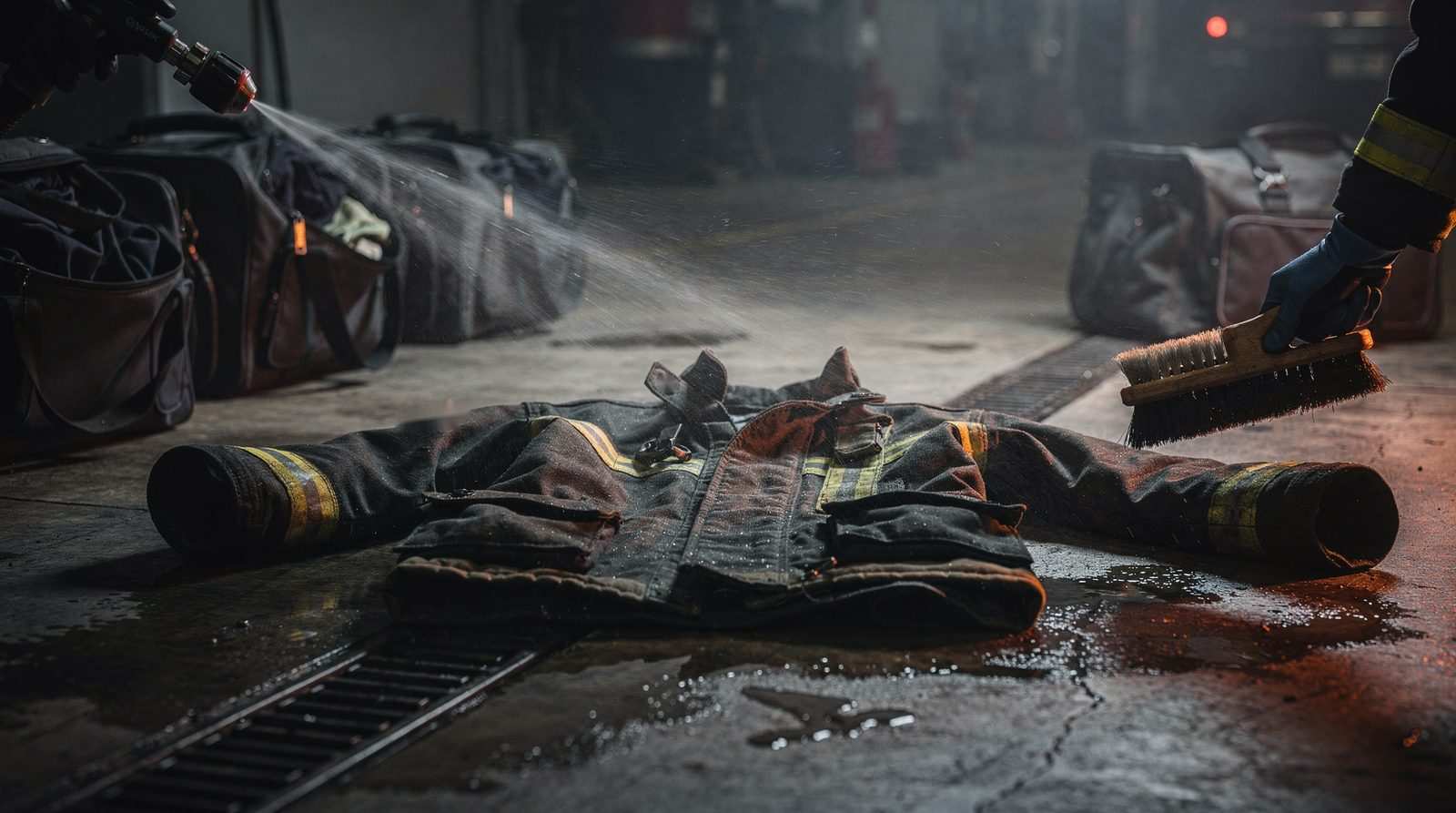
SCBA cleaning now uses the same four terms as turnouts: preliminary exposure reduction, routine cleaning, advanced cleaning and specialized cleaning. Sanitization and disinfection are separate processes for biological contamination. Advanced cleaning water can reach 120°F, and detergent pH must fall between 6 and 9.5.
The standard also adds universal PPE precautions, which means gear and SCBA are handled as contaminated until they're cleaned. Whoever cleans gear on the fireground wears a gown, gloves, eye protection and an N95, according to the TCFP summary. A new annex gives a sample risk assessment program.
Facilities running washers/extractors must now meet local, state and federal discharge rules and stay under regulatory contaminant limits. Onsite treatment or filtering needs evidence that it works. Discharge must be evaluated and documented at least quarterly for regulated contaminants, along with how wastewater is collected, treated and disposed of. TIA 26-1, which rewrote these rules, gives facilities two years from the standard's effective date to comply.
The same amendment covers ensembles after a lithium-ion battery (LIB) or energy storage system (ESS) fire. After preliminary exposure reduction, the department decides between advanced and specialized cleaning, weighing factors that run from how much of the fire involved batteries and whether the space was enclosed to crew exposure and whether the gear can be tested before and after cleaning. Our separate piece, "After the Lithium Fire: A Gear Decon Decision Tree," walks through each factor. Know what specialized cleaning costs before you need it. In Newport Beach's new contract, advanced cleaning and inspection of a turnout coat and liner is listed at $49, and carbon dioxide (CO2) cleaning of a coat at $105.
- One glossary shared by the turnout and SCBA SOPs, with no leftover terms from older editions, and SCBA steps for all four levels of cleaning.
- A facepiece cleaning and disinfection procedure is written into the SCBA SOP.
- Washer/extractor programs are updated and checked against each manufacturer's care label.
- The new evaluation protocols for gloves, boots and hoods are pulled from the standard.
- Gear-room and SCBA-bench SOPs require the handling PPE you adopt under universal precautions.
- Your wastewater utility or regulator has confirmed which limits apply, and a quarterly sampling and documentation plan is in place within the compliance window.
- Verification paperwork is on file for any filtration or treatment equipment.
- An LIB/ESS decision step is written into the cleaning SOP, and a specialized-cleaning option (an ISP or a process) is lined up in advance.
What changed for SCBA and stored gear
Detailed SCBA inspections and servicing stay with technicians trained or authorized by the manufacturer. Records cover inspections, cleaning, maintenance, cylinders and adverse conditions, and the department needs an adverse-condition SOP. The National Institute for Occupational Safety and Health (NIOSH) also asks departments to make reporting SCBA failures to the agency a standard operating procedure.
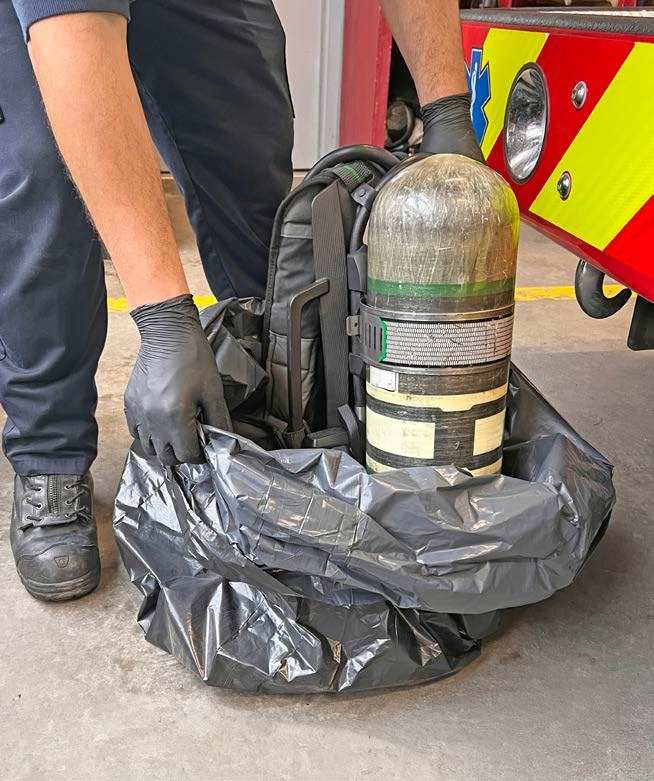
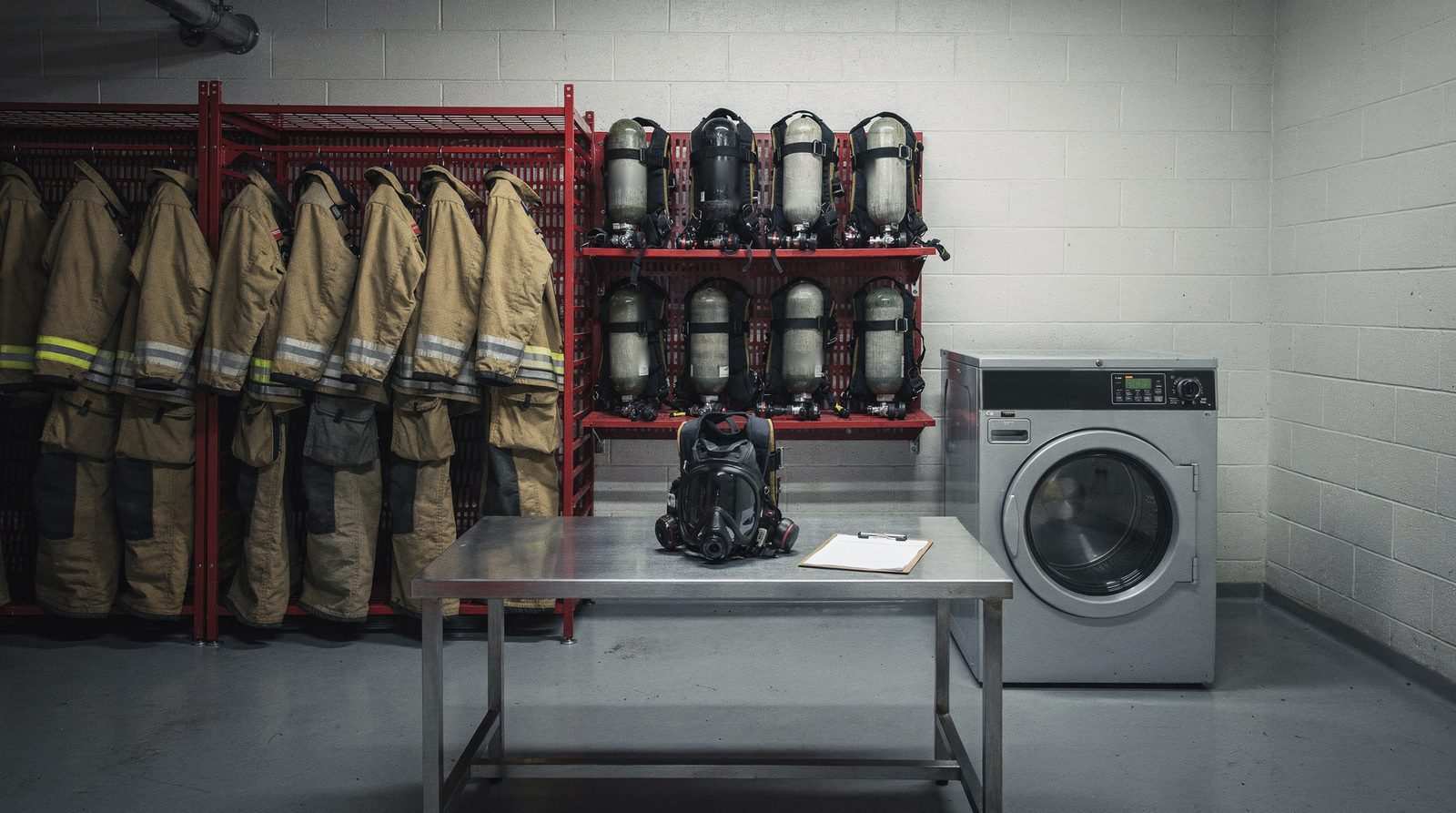
Advanced inspections of turnout gear happen at least annually, and stored gear gets one every three years. Storage rules cover on-duty and off-duty gear, including gear taken home in a personal vehicle. Contaminated gear rides in the cab only when it's bagged, and the TCFP briefing specifies an airtight container.
SCBA retire at 15 years, or 20 if the unit has been upgraded by two editions. Units certified to the 2007 edition of NFPA 1981 may stay in service for 18 months from the effective date. In budget documents, tie SCBA service life to the certification edition, manufacturer-approved upgrades and the conditions in NFPA 1850. NFPA 1970 changes, such as new end-of-service-time indicator (EOSTI) activation pressures and heads-up display (HUD) icons, also bear on whether an upgrade is worth buying.
The SCBA portion of the standard sets no implementation schedule, and departments are expected to comply as soon as practical, according to MSA Safety's guide to the standard. If a mechanical SCBA washer is in the plan, get the provider's verification that it doesn't harm SCBA performance; nothing yet requires proof that it removes contaminants. When a manufacturer's SCBA instructions conflict with the standard, follow the manufacturer. Adverse conditions get reported to the manufacturer and the certification organization, and retired SCBA must be destroyed or made unusable.
Your service providers have new work too. ISPs that service clothing must be verified to the new edition on a schedule set by their last verification, and certification organizations must publish actual cleaning-efficiency results, with optional removal categories for per- and polyfluoroalkyl substances (PFAS) and polycyclic aromatic hydrocarbons (PAHs). MSA's guide also notes that machine cleaning now extends to helmets, gloves and footwear, and that storage rules reach gear in transit to an ISP or cleaning facility. Advanced inspections add a full liner inspection, liquid-integrity tests for gloves and footwear, and a light test of the hood's particulate-blocking layer.
- Every ISP you use has given written, dated confirmation of its verification status, its published cleaning-efficiency results and any optional categories. Set a calendar reminder for any still pending.
- Machine cleaning of helmets, gloves and footwear happens only where each manufacturer allows it.
- Any mechanical SCBA washer has documented provider verification that it doesn't harm SCBA performance.
- A current roster of everyone who services SCBA, with authorization level and expiration date, and manufacturer care instructions available to every member.
- Each SCBA has records of inspections, flow tests, repairs and cylinder requalification, at the intervals the standard sets.
- An adverse-condition SOP that covers removal from service, securing the unit, chain of custody, and reports to the manufacturer, the certification organization and NIOSH's National Personal Protective Technology Laboratory.
- NIOSH's guides on securing an SCBA after adverse conditions (2026-105) and on reporting SCBA failure as an SOP (2026-106) are part of training.
- Bluetooth radio interfaces, telemetry and other SCBA accessories are in SOPs and training. NIOSH's F2026-01 injury report cites NFPA 1850 when it discusses accessories, and NIOSH 2026-113 covers using Bluetooth radio accessories without losing communication.
- The inventory shows manufacture date and next advanced-inspection date for every element, issued or not.
- The storage SOP covers on-duty, off-duty and in-transit gear.
- Retirement and destruction procedures are written for gear and SCBA.
Download the printable PPC manager card Print page
Newport Beach found the cost of NFPA 1850 in a bid. Most departments will find the rest of it in their own paperwork, and the PPC manager is the one who should go looking.
Sources (12)
Sources
- NFPA, NFPA 1850 standard development page.
- NFPA, NFPA 1850 product page (2026 edition).
- NFPA, TIA 26-1 to NFPA 1850 (2026).
- NFPA, NFPA 1970 product page (2025 edition).
- MSA Safety, Understanding the New NFPA 1850 Standard.
- NIOSH, Securing an SCBA after Adverse Conditions, Serious Injury, or Line-of-Duty Death (2026-105).
- NIOSH, Notifying NIOSH of SCBA Failure or Reduced Performance as a Standard Operating Procedure (2026-106).
- NIOSH, Preventing Loss of Communication: Using SCBA Bluetooth Radio Accessories (2026-113).
- Texas Commission on Fire Protection, NFPA 1850 Informational Session.
- NIOSH, Four Career Firefighters Injured from a Floor Collapse in an Abandoned Residential Structure Fire – Kansas, Report F2026-01.
- City of Newport Beach, staff report: Professional Services Agreement with California PPE Recon, Inc. for Personal Protective Equipment Cleaning, Inspection and Repair Services.
- Robert Tutterow, Keeping It Safe: The PPE Manager, Fire Apparatus & Emergency Equipment.