In this story
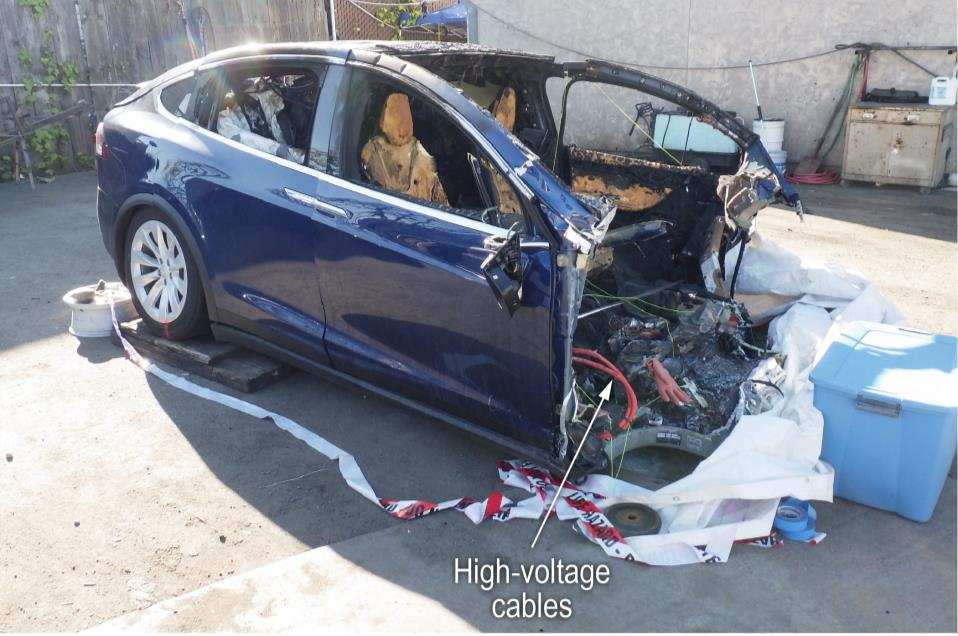
On August 25, 2017, an electric sport utility vehicle (SUV) crashed into a garage in Orange County, California, and the fire spread to the house. Orange County Fire Authority crews had most of the vehicle fire out within about 20 minutes of arriving. Then the battery kept reigniting. After crews pulled the SUV onto the driveway it flared up, was knocked down, sat quiet for about 45 minutes and then began burning in what firefighters described as a "blowtorch" manner. They propped it on cribbing and flowed up to 600 gallons per minute at the underside. By the end, more than 20,000 gallons had gone onto the vehicle over at least two hours.

It reignited again while it was being loaded onto the tow truck. The driver burned his arms lowering it back off the flatbed, because the controls were beside the fire and he had pulled off his wet gloves to work them. The SUV left the scene about six hours after the crash and smoked briefly once more while being unloaded at the tow yard.
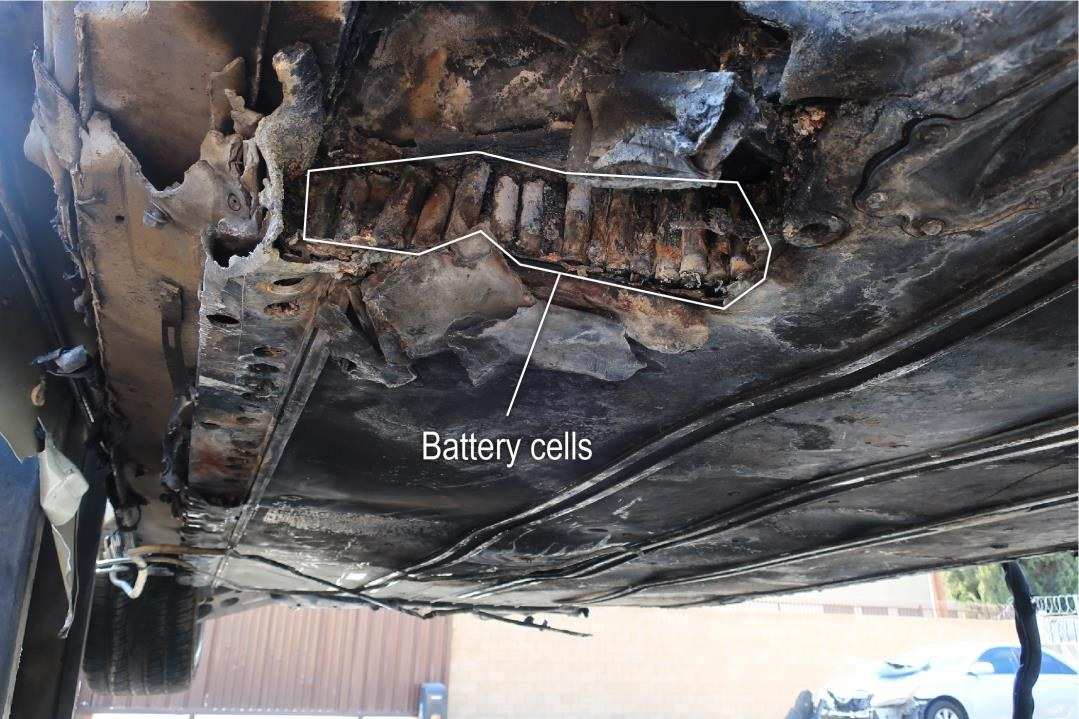
That crash was one of four the National Transportation Safety Board (NTSB) used for its 2020 safety report on electric vehicle (EV) fires. In all three crash cases, the damaged battery reignited after firefighters had put the fire out.
Why it comes back
A lithium-ion battery that's been crushed or burned can hold what the NTSB calls stranded energy: charge left in the cells that firefighters can't see or drain. Damaged cells can go into thermal runaway and pass heat to their neighbors, and the cell itself holds the heat, fuel and oxygen a fire needs. The pack sits sealed under the floor, so water on the outside of the car rarely reaches the cells that are burning.
The Mountain View case in the same report shows how long that can last. After a March 23, 2018, crash on U.S. Highway 101 in Santa Clara County, manufacturer engineers judged the SUV couldn't be made safe on scene and had it carried on wooden blocks to an impound yard in San Mateo, with the California Highway Patrol and Mountain View Fire Department as escort. About 20 minutes after it arrived, a patrol officer heard popping and called the San Mateo Fire Department, whose crews watched it with thermal cameras. Less than an hour later the battery reignited, then went out on its own. Five days after the crash, investigators removing equipment stood on parts of the car near the front of the battery case, and that evening a security guard saw smoke under the tarp. Crews ran the engine's 500 gallons through a 90-gallon-per-minute line, laid in to a hydrant, and stopped it only after adding foam. The runoff tested toxic, and a public works crew vacuumed about 600 gallons out of a storm drain.
Reignition also shows up long after the crash. In June 2022, Sacramento Metropolitan Fire District crews were called to a wrecking yard where a crash-damaged EV had been parked for three weeks awaiting dismantling. It was fully involved when they arrived and kept reigniting in the battery compartment. "Even with direct penetration, the vehicle would still re-ignite due to the residual heat," the district posted. Crews rolled the car on its side, then dug a pit with the yard staff, filled it and sank the battery compartment. "The pit ultimately reduced the total amount of water needed, estimated at 4,500 gallons," the district said.
What the newest research says about water
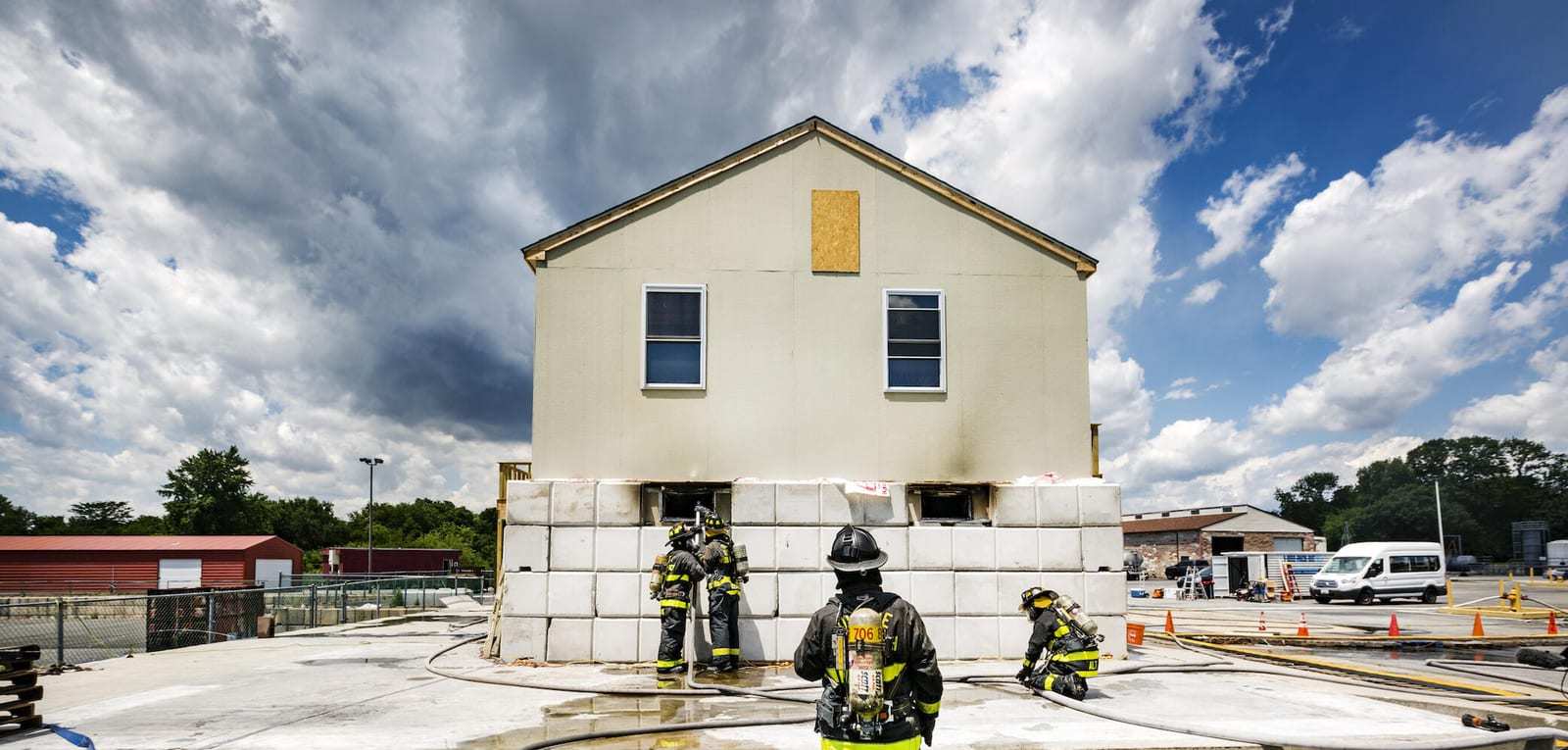
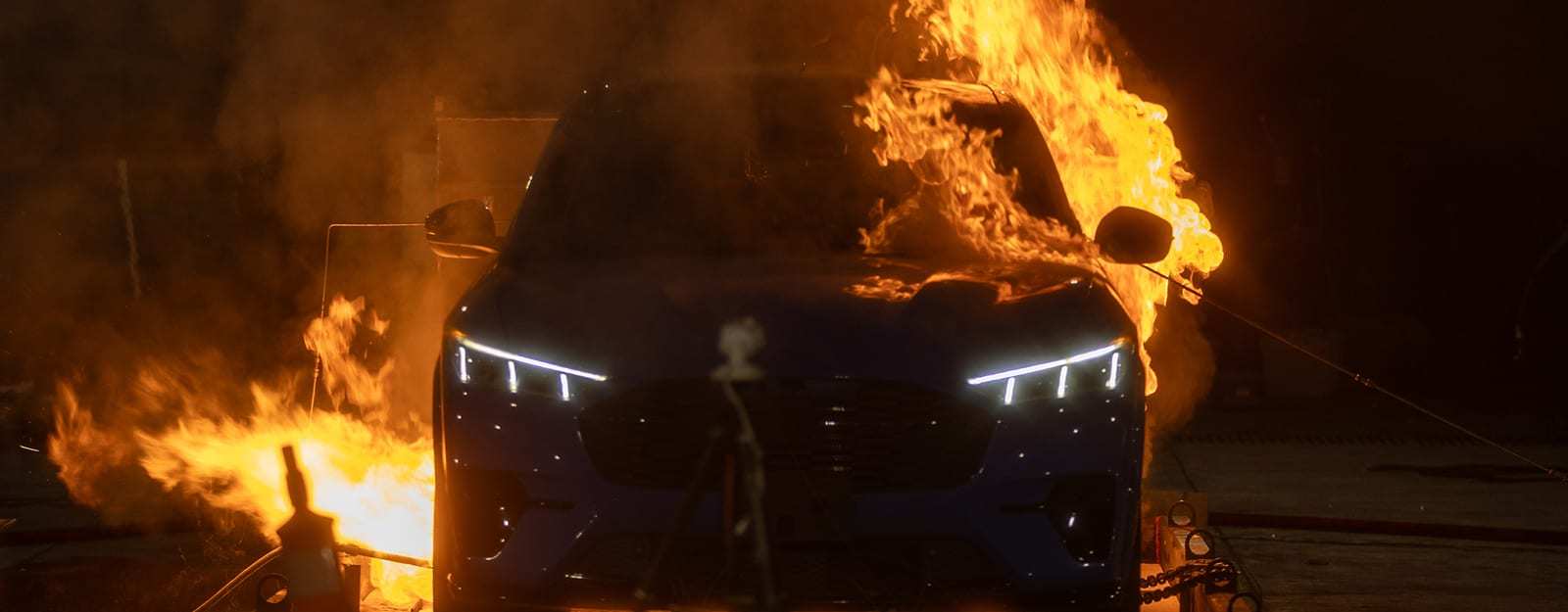
Those cases built the reputation that EV fires need tens of thousands of gallons. The UL Research Institutes' Fire Safety Research Institute (FSRI) tested that idea directly. It burned 18 vehicles, including nine free burns of six EVs and three gas-powered vehicles, then nine more EVs to compare suppression tactics. Batteries were fully charged, and suppression started six to seven minutes after thermal runaway to match a realistic response.
The findings, released in August 2026, cut against the water-heavy approach:
- The cabin fire went out quickly, in under 200 gallons and under two minutes in the handline tests.
- Extended cooling of the battery pack didn't stop thermal runaway in any test, and an additive was no more effective than plain water.
- The free-burning vehicles typically burned out within about 90 minutes, and every cell burned out in every free burn. EV and gas-vehicle fires were similar in growth rate, peak size and duration.
- A fog stream could push flaming gases away from exposures, and crews who had trained on the tactics did better.
In FSRI's order of work, the vehicle fire comes first and the battery second, with no delay to life safety for the sake of the battery. It recommends putting out the cabin, then using water to protect exposures and keep the cabin from reigniting while the battery burns itself out, which it estimates at under 1,000 gallons over about 30 minutes. The guidance adds that "Copious water on the vehicle and battery pack is ineffective due to vehicle construction."
"Our findings demonstrate that when it comes to EVs, first responders can effectively manage the hazard with familiar tools and tactics," said Adam Barowy, the project's principal research engineer.
The tests had limits. They started with intact, fully charged packs ignited on purpose. In the NTSB crash cases, high-speed impacts ruptured the battery cases and damaged modules and individual cells. A separate Fire Protection Research Foundation project on firefighting techniques and stranded energy ran through November 2025. If a crash has opened the pack, crews may still face repeated flare-ups that a burn-out strategy has to account for.
Two more points from the FSRI work matter after knockdown. Fire blankets controlled flaming but didn't stop thermal runaway, and lifting or moving them released gas that ignited. Adding an under-vehicle nozzle beneath the blanket didn't help either; steam pressure broke the seal and blew out a fireball. If a blanket is deployed, leave it in place, and don't use one indoors or in a confined space. In those tests, reignition stayed possible for more than an hour even after the smoke cleared.
Before you release the car
In its report, the NTSB found that manufacturers gave first responders and tow operators, whom it calls second responders, too little information on handling stranded energy. Manufacturer guides and SAE International's J2990 practice called for a 50-foot clear area around a damaged EV in storage, and the NTSB found that may not be possible in a crowded tow yard. In the Mountain View case there wasn't room, and in Orange County the SUV was parked 10 to 40 feet from other vehicles and a wall.
For the end of the call, FSRI's guidance gives a five-step sequence.
The case histories suggest a few more steps. Tell the operator out loud that the vehicle has a damaged high-voltage battery and that it may reignite in the yard days later. Give the yard the fire department's phone number and ask them to call at the first sign of smoke or popping. At Mountain View the five-day reignition started under a tarp, and an uncovered car is easier to watch. Warn anyone who will inspect it that standing on or flexing the floor pan near the battery can set it off again.
Runoff and gear
In the FSRI tests, the battery fires left elevated levels of metals and particulate fluoride in the smoke, in the runoff water and on turnout gear, while other combustion products were similar to those from gas-vehicle fires. The guidance is to approach from upwind and keep contact with debris and runoff to a minimum. The Mountain View storm drain shows where that runoff can end up. For cleaning the gear afterward, see our guide to gear decon after a lithium-ion fire.
One NTSB recommendation asked manufacturers to put fire, reignition, stranded-energy and storage information into their emergency response guides in a standard format. Pull those guides for the EVs most common in your district before the call, and make sure your tow companies have them too.
Sources (8)
Sources
- NTSB, Safety Risks to Emergency Responders from Lithium-Ion Battery Fires in Electric Vehicles (SR-20/01), 2020
- UL FSRI, Researchers Release Evidence-Based EV Battery Fire Response Considerations, 2026
- UL FSRI, Full-Scale Electric Vehicle Fire Experiments and Recommendations for Fire Incident Response, 2026
- UL Research Institutes, Releases New Evidence-Based Report Examining Electric Vehicle Fires (press release), 2026
- UL FSRI, Urban Fire Forum EV Experiments Briefing, 2026
- Fire Protection Research Foundation, Assessment of EV Firefighting Techniques and the Impact on Stranded Energy
- Asha C. Gilbert, USA Today, California firefighters use 4,500 gallons of water to extinguish Tesla fire that kept reigniting, 2022
- KTVU, California crews use 4,500 gallons of water to put out Tesla fire, 2022